Arboreal Renaissance
Javarzay Castle
05.09.2026 – 17.09.2026
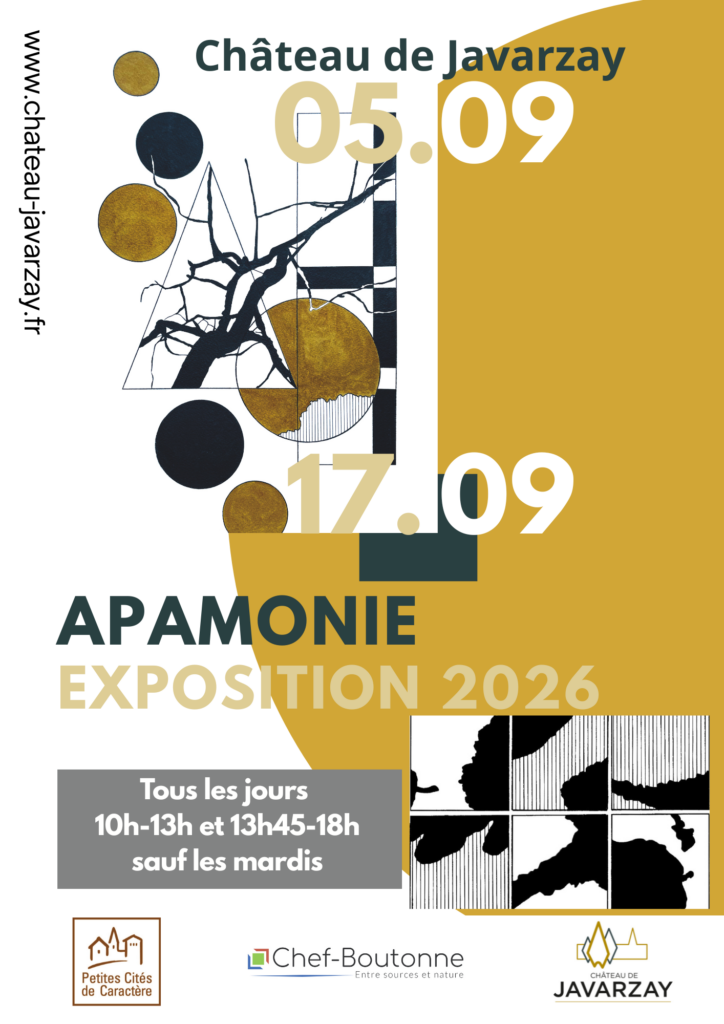
Exhibition at Javarzay Castle, 9 Avenue des Fils Fouquaud, 79110 Chef-Boutonne (France)
Opening hours: daily from 1:45 PM to 6:00 PM, except Mondays (10:00 AM to 1:00 PM and 1:45 PM to 6:00 PM). Closed on Tuesdays.
Free admission to the exhibition.
The artist will be present on September 5, 6, 16, and 17.
The exhibition draws a connection between Javarzay Castle and the adjoining arboretum.
The artworks combine geometric patterns and organic shapes. The former are inspired by architectural elements of the castle, while the latter were observed on-site in the landscaped grounds during a visit earlier in the year.
The exhibition highlights the commonalities between the two structures, despite their apparent opposition: one is man-made and ancient, the other natural and more recent. Yet, both evolve over time. The castle has undergone changes over the centuries, notably during the Renaissance. The arboretum, as a landscaped space, is destined to evolve at a steadier, faster pace, that of the seasons.
The artworks underscore this connection through their colour palettes, derived from the trees (trunks, leaves, seeds, flowers) and selected from the range of hues used by artists contemporary to the building’s construction.
Together, the castle and the arboretum create a space where concepts that appear opposed – yet are reconciled in reality – blend harmoniously. This exhibition invites you to visit both sites and marvel at their respective, yet complementary, beauties.
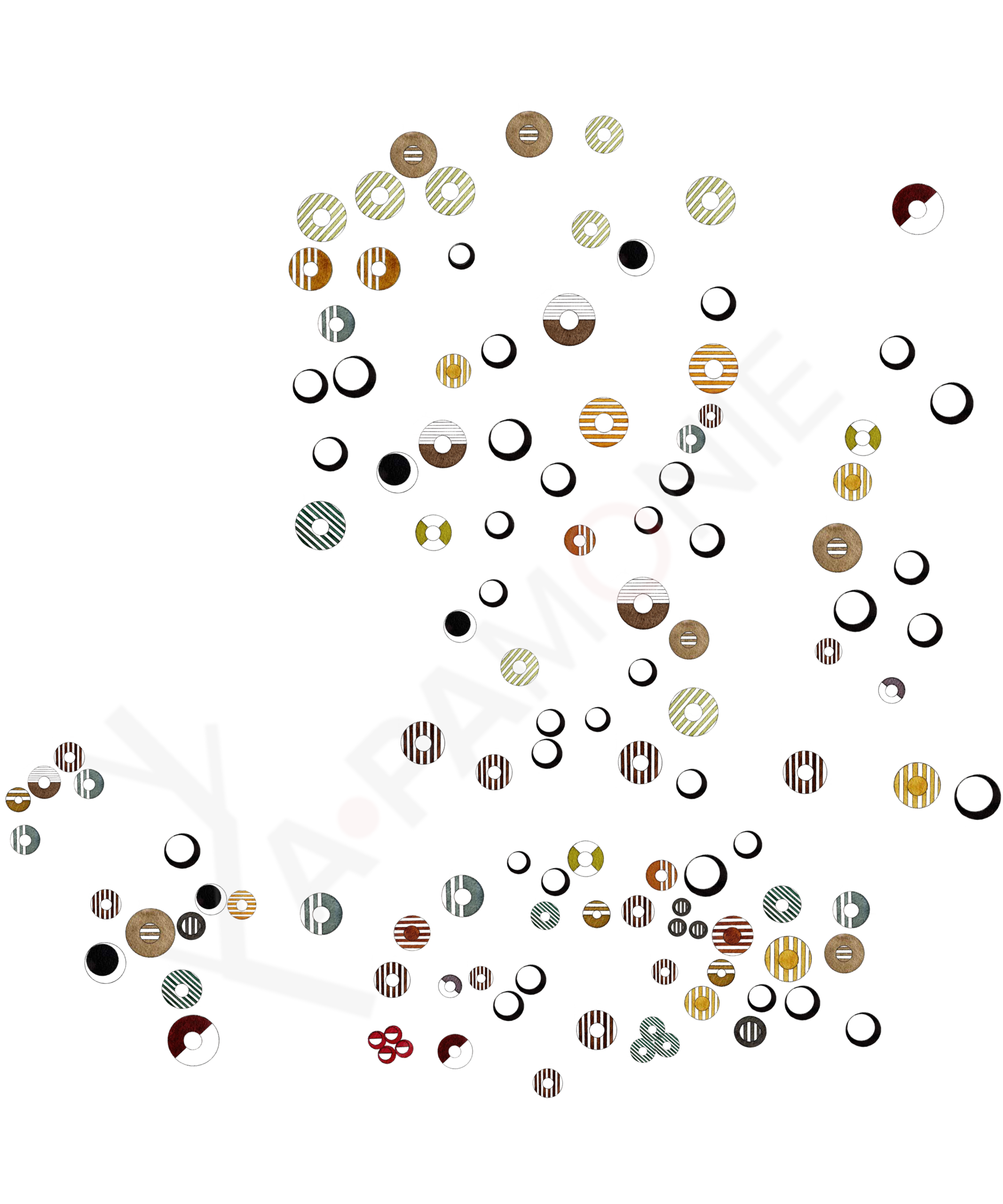
PLAN DRAWING
The arboretum map is transformed into a work of art in which each tree species is represented by a distinct geometric shape.
The plan drawing is deliberately not a traditional, technical, or precise planting plan, but rather an evocative presentation of the trees found in the arboretum.
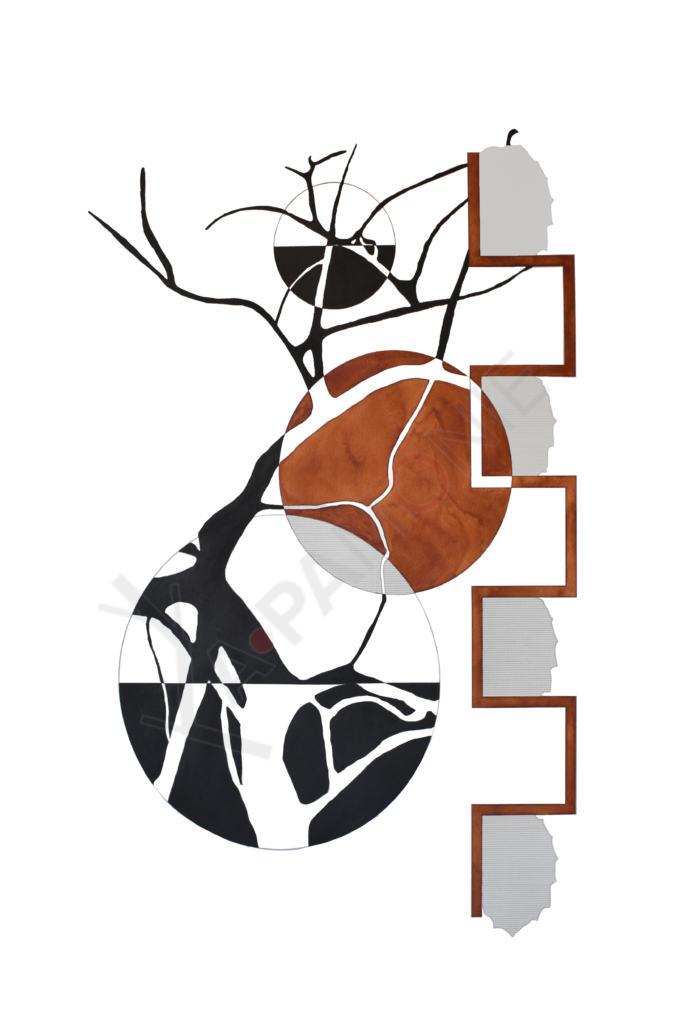
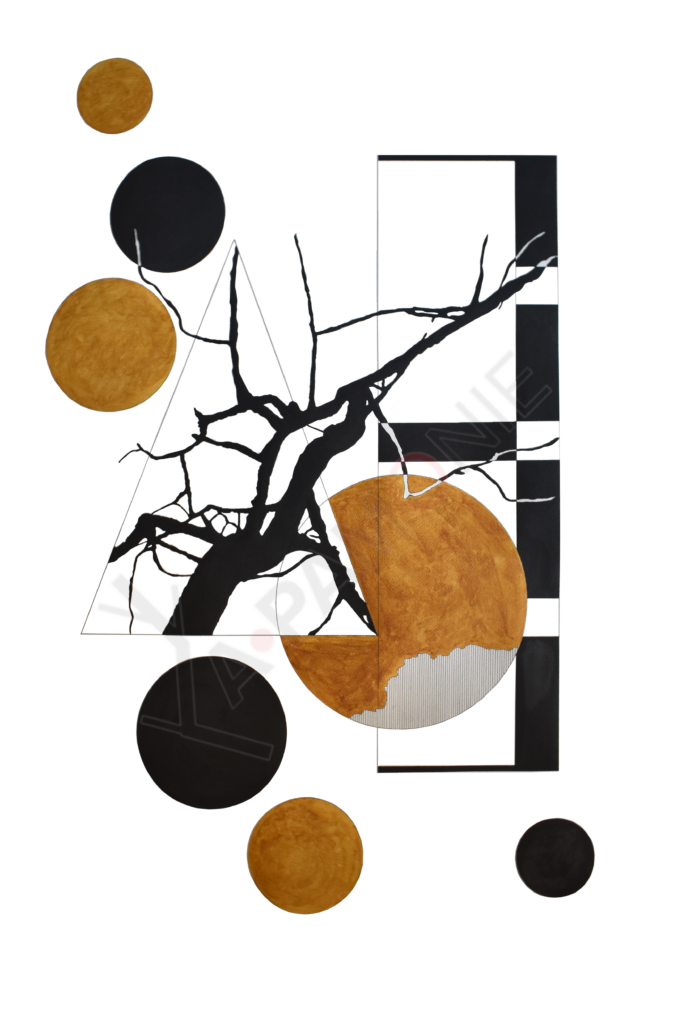
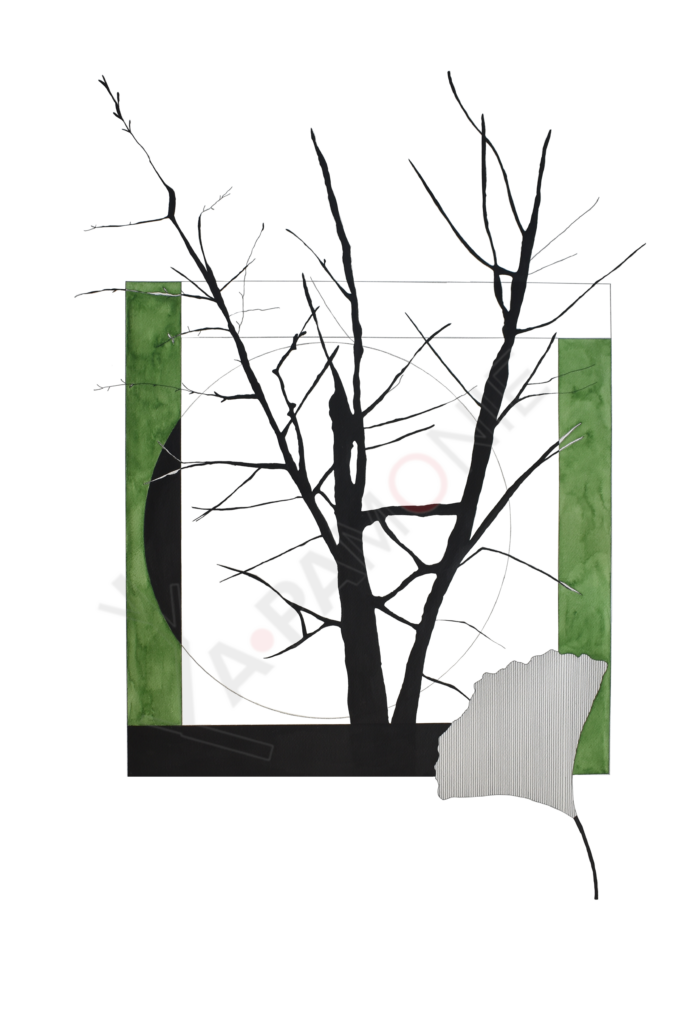
ARBOREAL RENAISSANCE
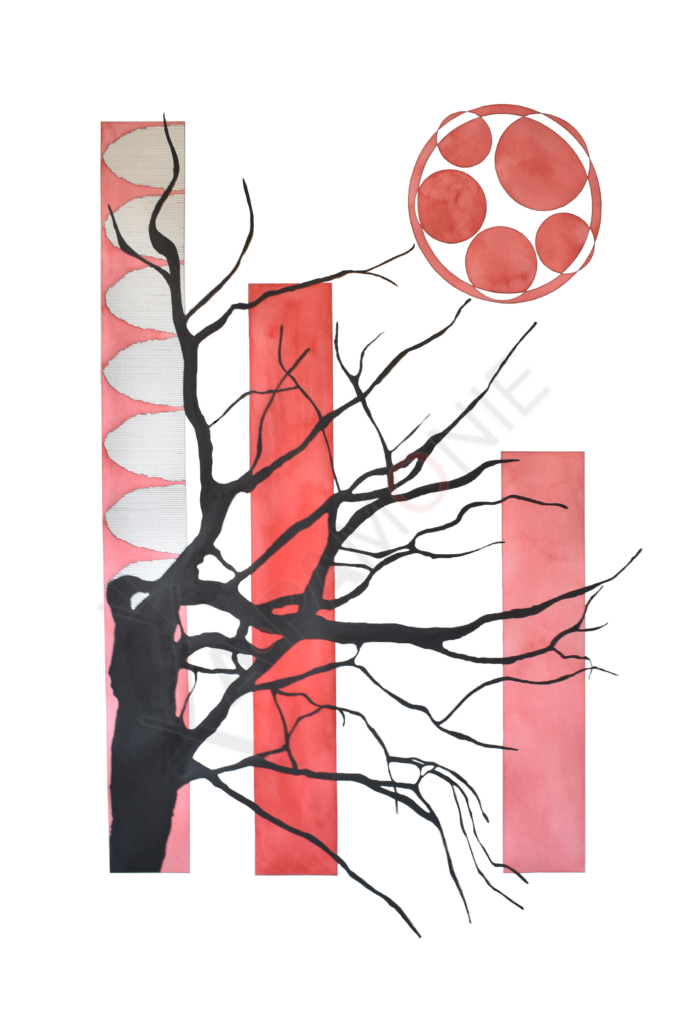
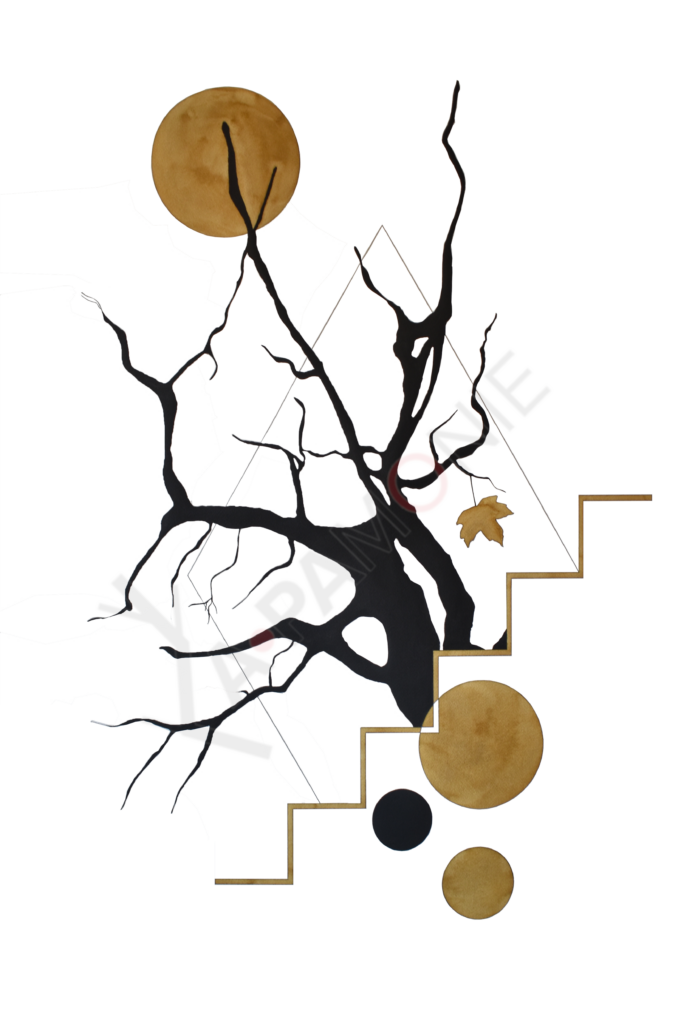
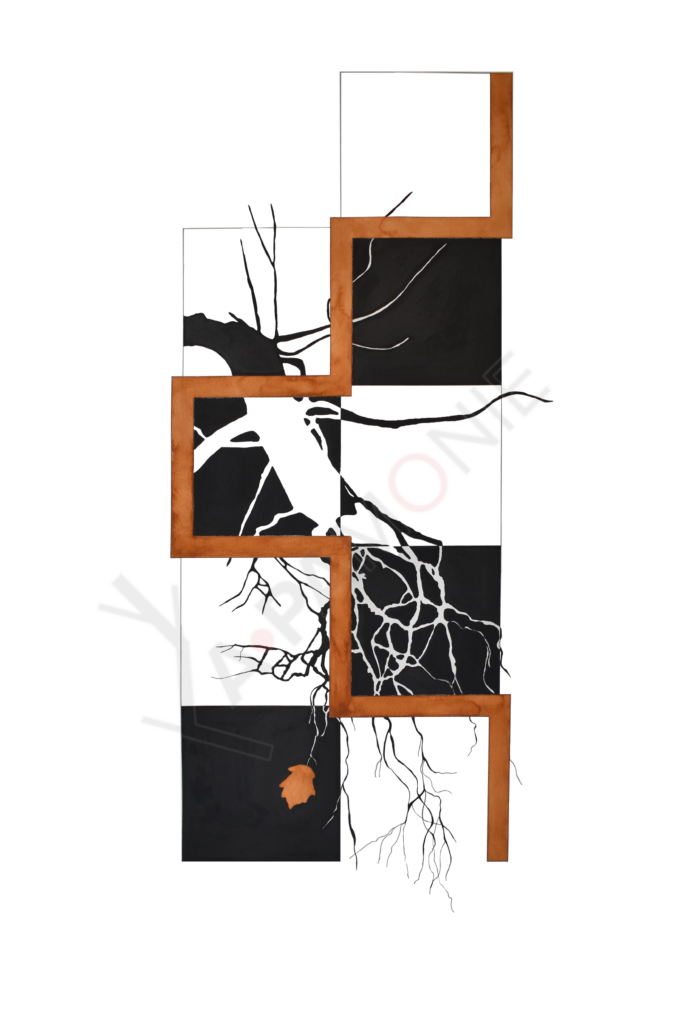
These compositions immerse us in landscapes formed by shapes derived from both the trees and the castle. Contrasting patterns are combined in an abstract, asymmetrical way to illustrate the convergence between the landscape expression of the trees in the arboretum and the architecture of the buildings.
Magnolia – Magnolia grandiflora Southern Magnolia
Acer – Acer pseudoplatanus Sycamore maple
Sorbus – Sorbus torminalis Wild service tree
Quercus – Quercus ilex Holm oak
Sophora – Sophora japonica Japanese padoga tree
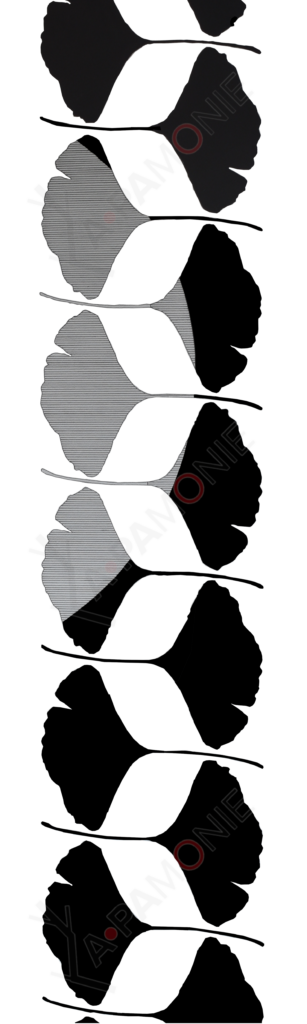
Ginkgo – Ginkgo biloba Ginkgo
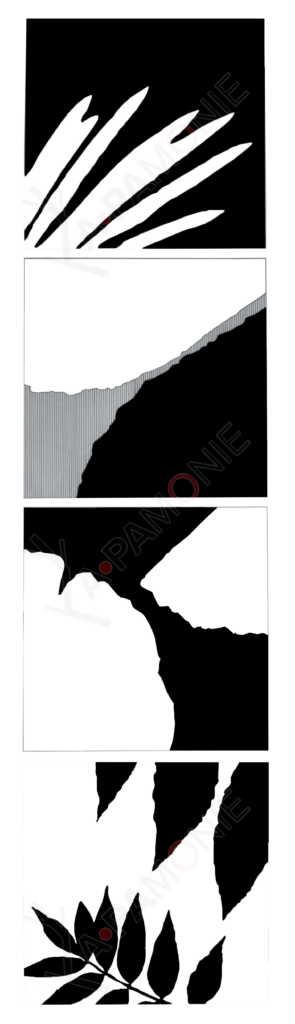
TRIPTYCHS
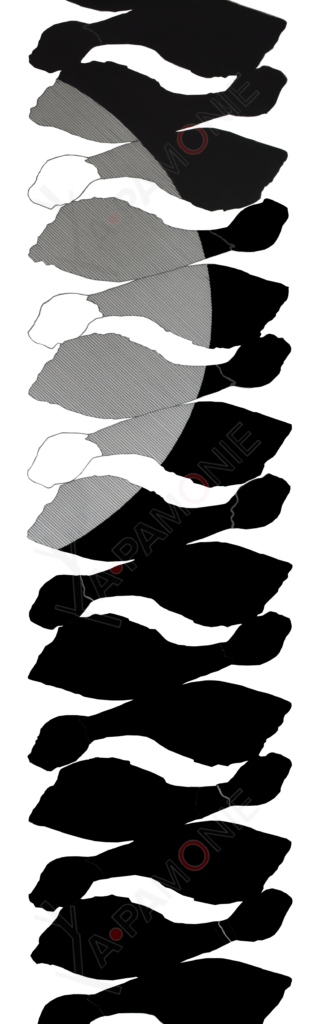
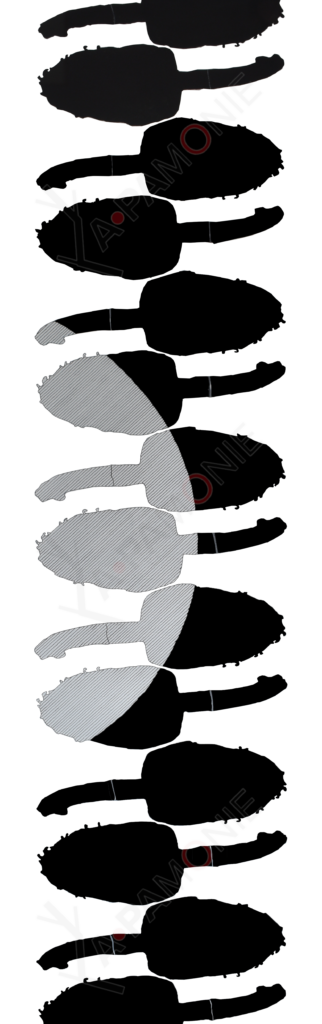
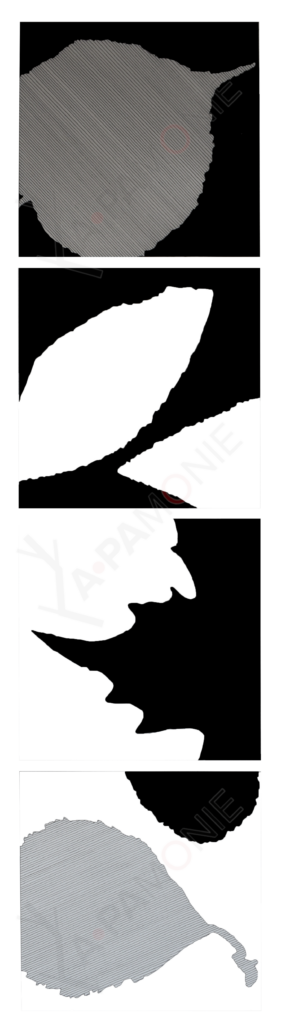
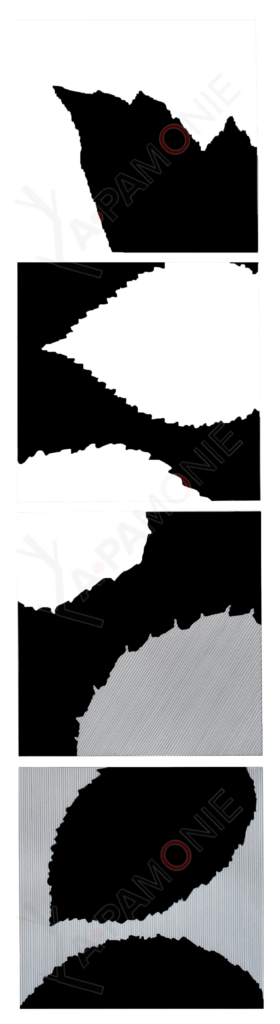
These works are minimalist expressions of tree leaves or fruit motifs. The chosen formal simplicity creates a subtle impression that sparks curiosity. Black, white, and lines alternate to highlight the shapes of the leaves.
Recurrences
Acer pseudoplatanus (fruit) Sycamore maple
Ginkgo biloba (leaf) Ginkgo
Magnolia grandiflora (fruit) Southern Magnolia
Folia
Tilia cordata Linden, Sophora japonica Japanese padoga tree, Platanus hispanica London plane, Alnus glutinosa Alder
Acer pseudoplatanus Sycamore maple, Ulmus Elm, Quercus ilex Holm oak, Carpinus betulus European hornbeam
Taxus baccata European yew, Aesculus hippocastanum Horse chestnut, Ginkgo biloba Gingko, Fraxinus excelsior European ash
DOUBLE STITCHING
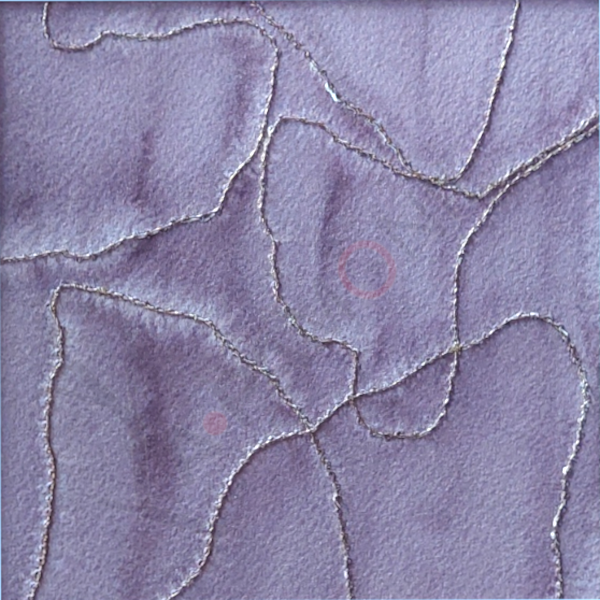
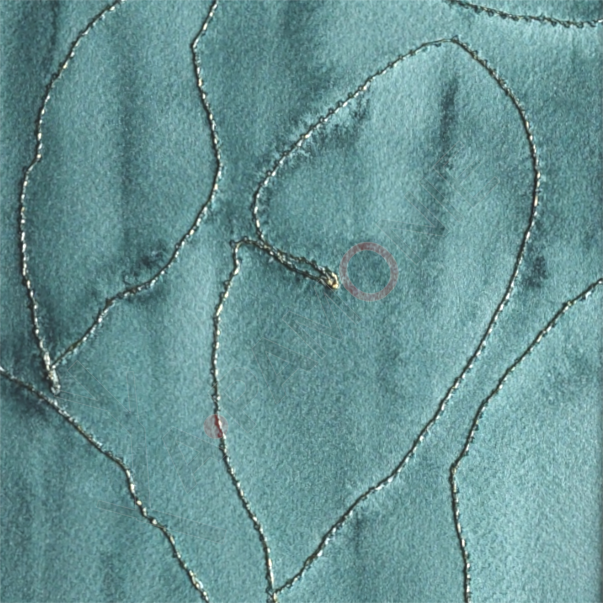
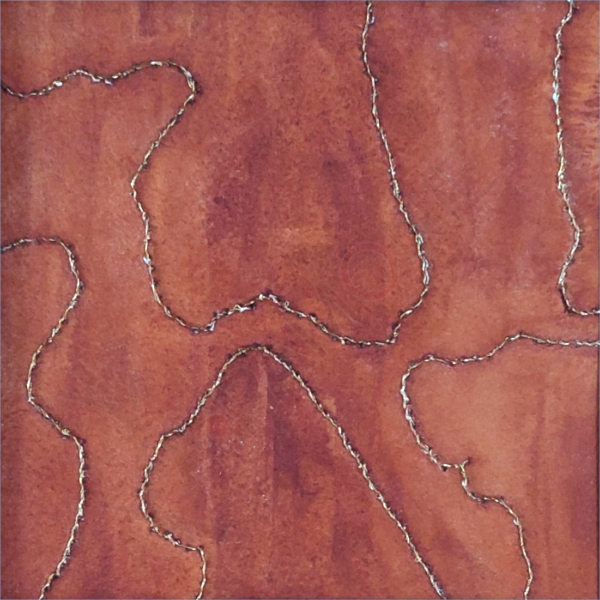
These works offer a different interpretation of leaf patterns, providing through the use of a distinct technique, another perspective on the tree species found in the arboretum.
Distortion – Ginkgo biloba Ginkgo
Leaf Talk – Juglans regia Noyer commun
Path – Ulmus Orme